The Truth. is a new blog series I’m starting. It gets personal, it gets raw, it gets heavy. This is a series that some may have to pass by, and understandably so. I’m not offended if you do. This series is therapy for me, but I really do hope I can help shed some light on what sometimes happens in the thoughts of survivors and why coming forward isn’t always as simple as outsiders would like to make it seem.
This is part 1.
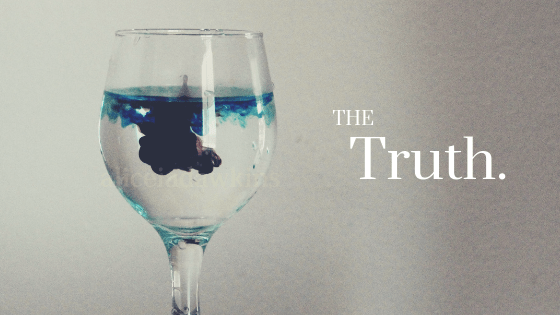
The Truth. – Confrontation (Trigger warning)
Let’s just begin with this simple fact: confrontation is not validation.
Now that we’ve gotten that out of the way… it happened.
It took me about a week to really begin to come to terms with the fact that I didn’t imagine it, it wasn’t a mistake and that sick feeling I had in my belly wasn’t from a bad dream. This was real life. This was my life. I was 13 and I had just become a part of a statistic that I had only ever seen on TV. All of a sudden, what I had watched on TV all those years had become my reality.
What does this mean? I knew I didn’t look different… I couldn’t possibly look different to anyone else but I felt different. I felt stained. Gross. Unclean.
My thoughts felt like they weren’t mine anymore. They were captured by this new monster that had broken into my soul, uninvited.
Okay, something happened, but what exactly? I started doing research. Maybe if it wasn’t categorised as anything specific that meant it wasn’t so bad. But if it wasn’t so bad why do I feel the way I do? If I can’t find a category to put it in does that then devaluate my feelings? Should it have been worse for me to feel the need to complain or feel uncomfortable? If it doesn’t fit a category then maybe this person I thought I knew almost all my life wasn’t such a horrible person after all.
You’re overacting, Aliceia.
But I wasn’t. There was a category for what happened and it was a crime. My feelings were validated. There was a weird victory in that – in knowing I wasn’t crazy for how I felt, but that tiny victory came with the realisation that this was real.
Molestation. (verb)
It had a name. The monster had a name and now I had a label.
Victim. (noun)
I was one of them.
In one day, my life had completely changed. Everything I thought I knew had become skewed. Everything I thought I would do if ever in such a situation had changed. I had no idea what to do. I didn’t fight during and that made me wonder if I had somehow given him the wrong idea. I didn’t tell my parents after and so I questioned if that would translate to me wanting it.
I thought of saying something. I thought of speaking out, but every time the words would slowly climb up my throat and act as a vice around my neck. I was choking on something invisible and that made me feel even weaker. So I said nothing.
For two years I said nothing.
I had friends that knew simply because there were some things I couldn’t hide, like the fact that my weight was fluctuating or the cuts on my wrists, or coming to school slightly intoxicated just to get through the day. But I told no adult for 2 years.
I struggled with my thoughts, that grew into nightmares, that grew into insomnia for fear of having nightmares.
So, I slept very little, ate even less and began to accept my new reality.
PTSD. (verb)
Life felt real to me in a way that I didn’t know it could before. My senses felt way too sensitive, everything felt loud and far too bright and far too fast.
Hypervigilance. (verb)
Now everything had a name. Everything had a label. I was labeled.
Damaged. (adjective)
This confrontation wasn’t about him. In fact, twelve years later that confrontation still hasn’t happened, and probably never will.
This was my personal confrontation and how it changed my life.
Ps. For everyone who says that if confrontation never happened or women who wait years to come forward are lying… you’ll never know or understand unless you’re in the position. If you don’t understand something, it’s best you keep quiet, ye?






 Alice Valentine
Leave a reply to A. S. Dawkins Cancel reply